Civil engineering in Australia represents one of the most stable and rewarding career pathways for international students seeking to build the infrastructure of tomorrow. With Australia’s massive AUD 120 billion infrastructure investment pipeline through 2030, pursuing civil engineering courses in Australia offers exceptional employment prospects with graduate starting salaries of AUD 70,000-85,000, rapid career progression to AUD 100,000-160,000+ within 5-10 years, and guaranteed pathways to Australian permanent residency through skilled migration programs.
As experienced education consultants and MARA-registered migration agents, Nepcoms guides Nepali students through every step of pursuing civil engineering degrees in Australia, from bachelor’s and master’s program selection to student visa applications and post-study permanent residency planning.
Why Study Civil Engineering in Australia?
Highest Demand Among All Engineering Disciplines
Civil engineers experience the highest demand among all engineering professions in Australia, according to Engineers Australia’s 2024 Labour Market Overview. The nation requires thousands of qualified civil, structural, geotechnical, and transport engineers to deliver major infrastructure projects.
This infrastructure boom of 2026 creates sustained employment security with 91% of civil engineering graduates securing full-time employment within four months of graduation, significantly higher than 79% average across all bachelor degrees. Civil engineer jobs in Australia span government departments, private consulting firms like AECOM, GHD, and Aurecon, major construction companies including John Holland, Lendlease, and CPB Contractors, and infrastructure development authorities.
Engineers Australia Accreditation & Global Recognition
All reputable bachelor of civil engineering Australia programs hold Engineers Australia accreditation, ensuring graduates meet professional engineering standards recognized under the Washington Accord. This international agreement means your Australian civil engineering degree is recognized in USA, Canada, UK, New Zealand, Singapore, and 20+ countries worldwide, providing truly global career mobility.
Work-Integrated Learning & Practical Experience
Australian civil engineering programs emphasize hands-on, practical learning through 60-80 days mandatory professional placements in bachelor programs, industry-sponsored capstone projects solving real infrastructure challenges, exposure to cutting-edge software including AutoCAD Civil 3D, Revit, 12D Model, and SAP2000, and collaboration with industry partners on live construction and design projects.
Bachelor of Civil Engineering in Australia
Program Overview & Duration
The Bachelor of Engineering (Honours) in Civil Engineering is a comprehensive 4-year undergraduate program preparing graduates for professional engineering practice. The honours designation is standard in Australian engineering education, indicating advanced technical depth and research capability beyond traditional bachelor degrees.
Core Curriculum:
- Engineering mathematics and applied physics
- Structural analysis and design
- Geotechnical engineering and soil mechanics
- Hydraulics and water resources engineering
- Transport and traffic engineering
- Construction materials and methods
- Engineering project management
- Sustainability and environmental engineering
- Computer-aided design and BIM (Building Information Modeling)
- Professional engineering practice and ethics
Many universities offer specialization pathways or dual degree options including Civil and Environmental Engineering, Civil and Structural Engineering, Civil Engineering and Construction Management, and combined Engineering-Commerce or Engineering-IT programs expanding career versatility.
Bachelor of Civil Engineering Admission Requirements
Academic Prerequisites:
- Completion of +2/Higher Secondary Education with minimum 2.8 GPA or 60% overall
- Strong performance in Mathematics (Algebra, Calculus) and Physics highly preferred
- Some universities require specific mathematics prerequisites
English Proficiency Requirements: Civil engineering programs require effective technical communication and documentation skills:
- IELTS Academic: Overall 6.5 (no band less than 6.0)
- PTE Academic: Overall 58+ (no component less than 50)
- TOEFL iBT: Overall 79+ (component scores vary by university)
Top Universities for Civil Engineering in Australia
Metropolitan Universities:
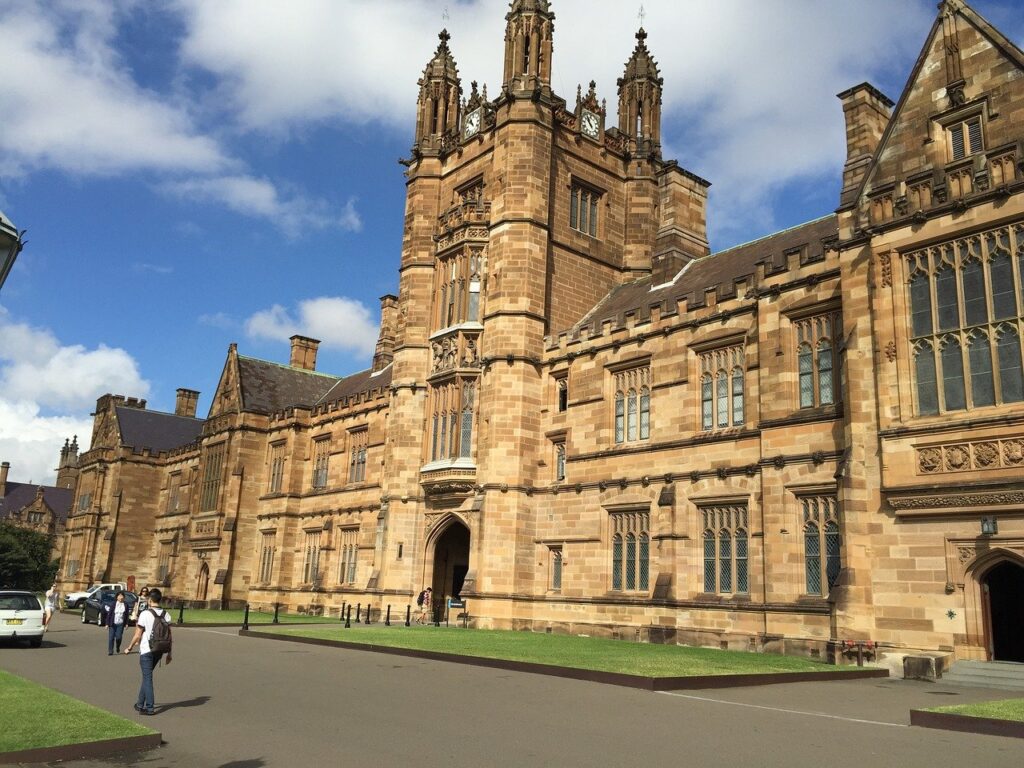
- University of Sydney: Ranked #61 globally; premium reputation; AUD 52,000-55,000 annually
- RMIT University (Melbourne): Strong industry connections; practical focus; AUD 46,000-48,000 per year
- University of Technology Sydney (UTS): Innovative curriculum; industry placements; AUD 48,000-50,000 annually
- Monash University: Global recognition; research excellence; AUD 45,000-48,000 per year
- Queensland University of Technology (QUT): Highest graduate employment; work placements with major firms; AUD 45,500-48,600 per year
Regional Universities (PR Advantages):
- University of Newcastle: Strong industry partnerships; lower costs; AUD 36,000-38,000 annually; 5-15 bonus migration points
- University of the Sunshine Coast: Provisional Engineers Australia accreditation; coastal lifestyle; AUD 30,000-33,000 per year
- Victoria University (VU Sydney): Competitive fees; Block Model delivery; AUD 20,500 per semester; excellent regional pathway benefits
- Charles Sturt University: Regional campus advantages; practical learning; AUD 30,000-32,000 annually
Regional study provides substantial benefits including lower tuition fees (saving AUD 40,000-80,000 over 4 years), reduced living expenses (AUD 1,200-1,600 monthly vs AUD 2,000-2,500 in Sydney/Melbourne), additional 5-15 skilled migration points for regional areas, and extended post-study work rights (3-4 years vs 2 years metropolitan).
Bachelor of Civil Engineering Cost 2026
Tuition Fees:
- Top-Tier Metropolitan Universities: AUD 45,000 – AUD 55,000 per year
- Mid-Tier Metropolitan Universities: AUD 36,000 – AUD 45,000 per year
- Regional Universities: AUD 20,500 – AUD 33,000 per year
- Total 4-Year Program: AUD 82,000 – AUD 220,000
Additional Costs:
- Student Visa Fee: AUD 710
- Overseas Student Health Cover: AUD 500-700 annually
- Living Expenses: AUD 29,710 minimum (government requirement)
- Engineering Calculator & Equipment: AUD 500-800
- Software Licenses (if required): AUD 200-500 per year
- Textbooks & Materials: AUD 800-1,200 per year
Total First-Year Investment: AUD 70,000 – AUD 90,000 (approximately NPR 61 lakh – NPR 78 lakh)
Master of Civil Engineering in Australia
Advanced Specialization & Career Acceleration
The Master of Engineering (Civil) or Master of Professional Engineering (Civil) is a specialized 1.5-2 year postgraduate program designed for graduates with engineering backgrounds seeking advanced technical expertise, professionals pursuing chartered engineer status, and international engineers requiring Australian qualification recognition.
Master’s programs provide deeper specialization in structural engineering, geotechnical engineering, water resources, or transport systems, exposure to emerging technologies like smart infrastructure and sustainable construction, research methodology and innovation capabilities, and significantly enhanced salary prospects (AUD 85,000-105,000 starting vs AUD 70,000-85,000 for bachelor’s).
Master’s Program Structure & Specializations
Core Curriculum:
- Advanced structural analysis and design
- Foundation engineering and geotechnics
- Water resources management and hydraulics
- Transport infrastructure planning
- Construction project management
- Sustainable and resilient infrastructure
- Research methods and engineering project
Specialized Streams:
- Structural Engineering: Advanced building and bridge design; earthquake engineering; AUD 88,000-105,000 starting salaries
- Geotechnical Engineering: Foundation design, slope stability, tunneling; AUD 85,000-100,000 starting
- Water Resources Engineering: Dam design, flood management, water supply systems; AUD 82,000-95,000 starting
- Transport Engineering: Highway design, traffic modeling, public transport; AUD 85,000-98,000 starting
Master of Civil Engineering Admission Requirements
Academic Prerequisites:
- Bachelor’s degree in civil engineering or related engineering discipline with minimum 2.5/4.0 GPA
- Non-civil engineering graduates may require bridging courses
- Professional work experience considered favorably
English Proficiency Requirements:
- IELTS Academic: Overall 6.5-7.0 (no band less than 6.0)
- PTE Academic: Overall 58-65+
- TOEFL iBT: Overall 79-94+
Master of Civil Engineering Cost & Investment
Tuition Fees 2026:
- Top-Tier Universities: AUD 48,000 – AUD 55,000 per year
- Mid-Tier Universities: AUD 40,000 – AUD 48,000 per year
- Regional Universities: AUD 30,000 – AUD 40,000 per year
- Total Program (1.5-2 years): AUD 45,000 – AUD 110,000
Scholarship Opportunities: International students can access various scholarship opportunities including merit-based awards (15%-30% tuition reduction), destination Australia scholarships for regional study (AUD 15,000 annually), research scholarships for thesis-track programs, and university-specific engineering scholarships. Nepcoms assists with identifying and applying for relevant scholarships.
Civil Engineering Salary in Australia 2026
Exceptional Earning Potential & Career Progression
Bachelor Degree Graduate Salaries:
- Graduate Civil Engineer: AUD 70,000 – AUD 85,000 annually (starting)
- Entry-Level Structural Engineer: AUD 70,000 – AUD 82,000 initially
- Junior Project Engineer: AUD 72,000 – AUD 88,000 starting
- Graduate Geotechnical Engineer: AUD 68,000 – AUD 80,000 entry-level
Master’s Degree Graduate Salaries:
- Civil Engineer (Master’s): AUD 85,000 – AUD 105,000 starting
- Structural Engineer: AUD 88,000 – AUD 110,000 initially
- Senior Project Engineer: AUD 95,000 – AUD 115,000 starting (with experience)
- Civil Engineering Consultant: AUD 90,000 – AUD 120,000 starting
Experienced Civil Engineer Salaries: The average civil engineer salary in Australia reaches AUD 100,000+ annually, with senior engineers (10+ years experience) earning AUD 120,000-160,000 and principal/lead engineers commanding AUD 160,000-220,000+ depending on specialization and location.
Post-Study Work Rights & PR Pathways
Temporary Graduate Visa (Subclass 485)
Bachelor Degree Graduates: 2-4 years post-study work rights depending on study location, with regional graduates receiving extended duration providing opportunity to gain critical Australian engineering experience.
Master’s Degree Graduates: 2-3 years standard; 3-4 years for regional study, allowing graduates to build professional experience, pursue CPEng certification, and accumulate skilled migration points.
Permanent Residency Pathways for Civil Engineers
General Skilled Migration (Subclass 189, 190, 491): Civil Engineer (ANZSCO 233211), Structural Engineer (ANZSCO 233214), Geotechnical Engineer (ANZSCO 233212), and Transport Engineer (ANZSCO 233215) all feature on skilled occupation lists, offering excellent points potential:
- Australian bachelor: 15 points; honours/master’s: 15-20 points
- Australian work experience (1-3 years): 5-15 points
- Superior English (IELTS 7.5+, PTE 79+): 20 points
- Age under 32: 30 points
- Regional study: 5-15 points
- Engineers Australia skills assessment: Required for civil engineering occupations
Employer Sponsored Visa (Subclass 186, 494): Major Australian infrastructure companies, consulting firms like AECOM and GHD, government departments, and construction companies actively sponsor experienced civil engineers for permanent residency after 2-3 years employment.
State Nomination Programs: Victoria, NSW, Queensland, South Australia, and Western Australia actively nominate civil engineers through state sponsorship programs, adding 5-15 points to skilled migration applications and offering priority processing for infrastructure projects requiring qualified engineers.
Most civil engineering graduates from Australia successfully transition to permanent residency within 3-5 years through combination of qualifications, work experience, professional certification, and strategic migration planning.
Why Choose Nepcoms for Civil Engineering in Australia
As specialized education and migration consultants with expert visa services, Nepcoms provides comprehensive support including free civil engineering course assessment, university selection and program comparison, Engineers Australia accreditation verification, scholarship identification and applications, genuine student statement preparation meeting 2026 standards, complete student visa documentation and lodgement, English test preparation guidance, and post-arrival accommodation assistance.
Our experienced team understands Nepal’s education system, Australian engineering requirements, Engineers Australia assessment processes, and long-term PR pathways, ensuring your civil engineering education investment maximizes both career outcomes and migration success.
Frequently Asked Questions
Is civil engineering a good career in Australia?
Excellent career choice with highest demand among all engineering professions, 91% graduate employment rate, starting salaries AUD 70,000-85,000, and clear PR pathways through skilled migration.
How much do civil engineers earn in Australia?
Graduate civil engineers start at AUD 70,000-85,000 annually, average civil engineer salary reaches AUD 100,000+, and experienced engineers earn AUD 120,000-160,000+ depending on specialization and location.
What is Engineers Australia accreditation?
Engineers Australia accreditation ensures civil engineering programs meet professional standards recognized internationally under Washington Accord, qualifying graduates for professional engineer registration and migration assessment.
Can I get PR after civil engineering in Australia?
Yes, Civil Engineer features on skilled occupation lists with excellent PR prospects through General Skilled Migration (189, 190, 491 visas), employer sponsorship, and state nomination programs.
Which is better for civil engineering: bachelor’s or master’s?
Bachelor (4 years) provides comprehensive foundation and direct pathway to professional practice. Master’s (additional 1.5-2 years) offers advanced specialization, higher starting salaries (15-20% premium), and faster career progression.
Do I need mathematics for civil engineering?
Yes, strong mathematics skills (algebra, calculus, trigonometry) are essential for civil engineering success. Most universities require mathematics prerequisites or provide bridging courses.
Start Your Civil Engineering Journey with Nepcoms
Pursuing civil engineering courses in Australia offers world-class education in infrastructure design and construction, exceptional career opportunities with AUD 70,000-160,000+ earning potential, and guaranteed pathways to Australian permanent residency in one of the world’s most infrastructure-focused economies.
Ready to build the future?
📧 Email: ktm@nepcoms.com
📞 Phone: 9801292944
Book your free civil engineering consultation today with our education and migration experts to assess your eligibility, explore scholarship opportunities, and develop your personalized pathway to engineering success and Australian permanent residency